
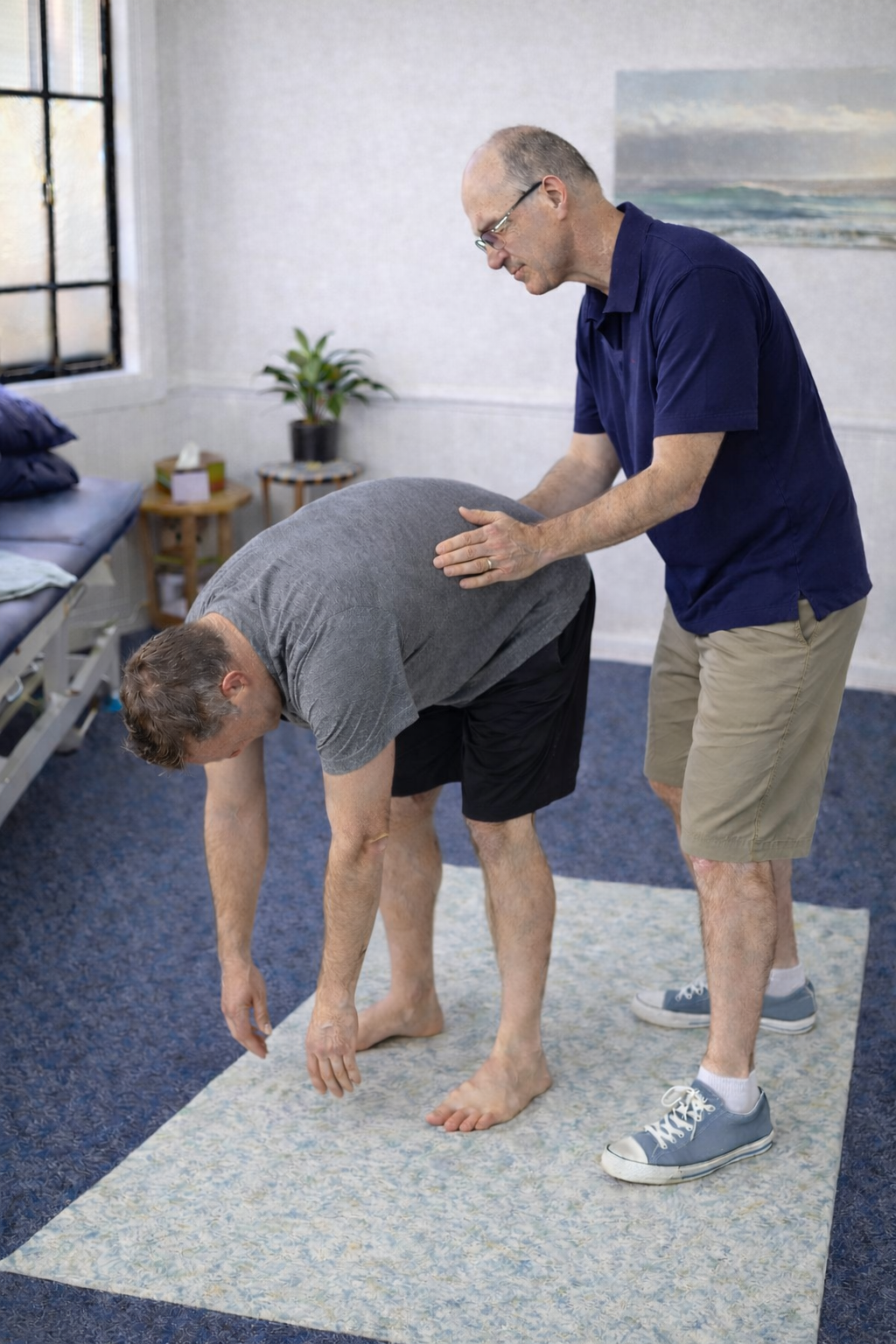
These phrases can sound frightening, especially when they appear on scan reports or in conversations about the spine.
In reality, they are often misunderstood.
Discs rarely “slip out”
Discs don’t normally slip out of place.
They can become irritated or bulge slightly, and sometimes this can irritate a nearby nerve and create symptoms such as sciatica. But the spine itself is a remarkably strong and adaptable structure, and many disc-related problems improve well with the right approach.
“Pinched nerve” often means irritation rather than compression
Most of the time a nerve isn’t literally being crushed.
More commonly the nerve has become sensitive or irritated, or the surrounding tissues are restricting how it moves. That’s why symptoms can change with treatment, movement, and improved load management. You can read about Sciatic pain and its treatment in The Sciatic Treatment page.
A careful assessment usually clarifies whether symptoms are coming more from joints, muscles, nerve irritation, or a combination of these.
The aim is not simply to treat one structure.
The aim is to help the body organise movement comfortably again so you can meet the demands of work, daily life, and the activities you enjoy.
Many people who develop back pain carry a quiet worry in the background:
• “What if it seizes again?”
• “What if I’ve damaged something?”
• “What if I end up needing surgery?”
• “What if the scan means my back is degenerating?”
Those fears are understandable. But fear itself can change how we move. It often leads to guarding, stiffness, and a loss of confidence in the body.
Part of good physiotherapy is helping people rebuild trust in their movement again, step by step.
One of the biggest worries people have with back pain is that they will need to stop the things they enjoy.
In most cases that isn’t the aim.
The goal is usually to help the body return to those activities safely and confidently, rather than avoiding them completely.
Sometimes that means adjusting the load or modifying certain movements for a while. As strength and movement improve, people can usually return gradually to the things they enjoy — whether that’s tennis, gym training, walking, gardening, or simply getting through a busy workday without worrying about their back.
If you are experiencing back pain, sciatica, stiffness, or recurring flare-ups, a careful assessment can usually clarify what is happening and help guide a practical path forward.
Appointments can be booked online or by contacting the clinic directly.
Back tightness is often the body’s way of protecting an irritated or sensitive area. When joints, discs, or nerves become irritated, the surrounding muscles may increase their activity to stabilise the region.
This can create a feeling of stiffness or tightness even when there is no serious damage. Stress, fatigue, and changes in activity levels can also contribute to this protective response.
Because the back feels tight, people often assume they need to stretch it strongly. In some situations this can actually irritate the area further. When the body is protecting itself, pushing aggressively into stretches can sometimes make symptoms worse.
A careful assessment usually helps clarify why the back is feeling tight and what type of movement or treatment will help it settle.
If you’d like a more detailed explanation of why back tightness develops and what helps it settle, you can read our article “Why Does My Back Feel Tight All the Time?”
No. In most situations you do not need an MRI, CT scan, or X-ray before seeing a physiotherapist.
A careful history and physical assessment usually provides much more useful information about how the back is behaving. Understanding how the back moves, what aggravates symptoms, and how the body is responding often gives clearer guidance than imaging alone.
Scans are usually used when there is a specific reason to investigate further, rather than being the starting point for assessment.
If at any stage your symptoms suggest that imaging or medical review would be helpful, this can be discussed and arranged. The most important first step is usually a thoughtful assessment rather than waiting for a scan before seeking help.
No referral is required to see a physiotherapist.
People can book directly for assessment and treatment. Physiotherapists are trained to assess and manage musculoskeletal problems such as back pain, neck pain, and sports injuries.
If at any stage your situation would benefit from involvement from a GP or another specialist, this can be organised as part of your care.
Many people wait longer than they need to because they hope the pain will simply settle.
Physiotherapy can be helpful when:
Early guidance often helps people recover more confidently and avoid ongoing flare-ups.
When back pain first appears, short periods of rest can sometimes feel helpful. However, staying completely still for too long can often make the back feel stiffer and more sensitive.
In most cases, gentle movement is an important part of recovery. The aim is not to push through pain or force movement, but to gradually restore comfortable motion and confidence in the back.
When pain begins, the body often becomes protective. Muscles may tighten and movement can feel guarded. Gentle movement, breathing, and gradually returning to everyday activities can help the body settle and reorganise.
Physiotherapy often focuses on helping people find the right balance between rest and movement. As symptoms settle, movement and strength can be gradually progressed so the body can meet the demands of work, daily life, and the activities you enjoy.
Many episodes of back pain improve within a few weeks, although recovery is not always perfectly steady.
It is common for symptoms to improve in waves — with periods of progress and occasional flare-ups along the way. These fluctuations are often a normal part of recovery as the body adapts and movement confidence returns.
With the right combination of guidance, movement, and gradual progression, most people are able to return to their usual activities. I have written an article which will help you understand the healing process in back pain. You can read it here.
Most episodes of back pain are not dangerous and improve with the right guidance and movement.
However, there are a few situations where prompt medical assessment is important.
You should seek medical advice if back pain is associated with:
• significant trauma such as a fall or accident
• unexplained weight loss or feeling generally unwell
• fever, night chills, or signs of infection
• numbness around the anal or genital area
• difficulty controlling bladder or bowel function
• progressive weakness in the leg or foot, particularly if walking is becoming difficult or you are frequently tripping
These situations are uncommon, but they are important to recognise.
If at any stage there are signs that further medical investigation would be helpful, this can be discussed and arranged as part of your care.