
Jaw pain can develop for many different reasons.
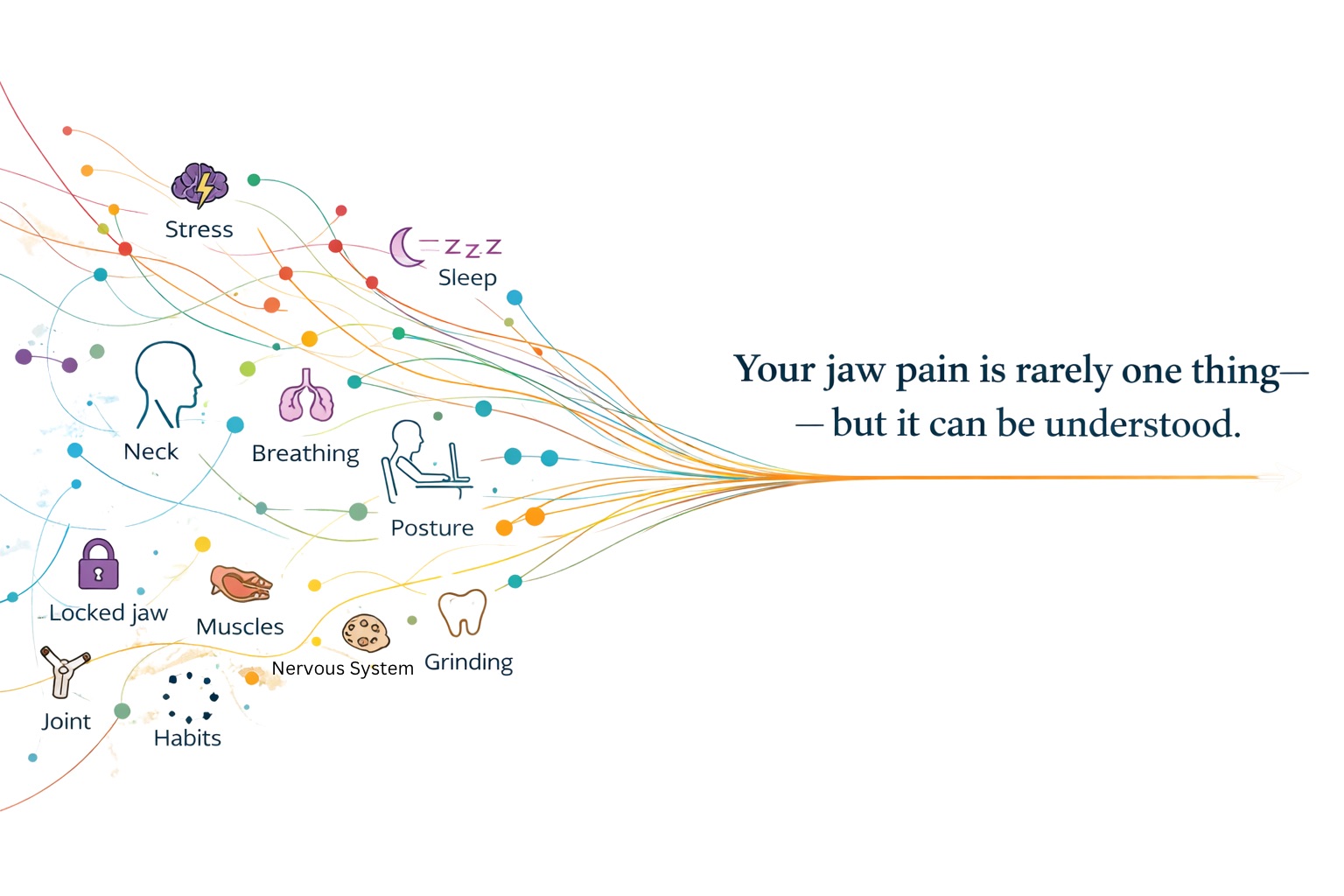
Jaw pain is rarely caused by one thing — it’s usually a combination of factors working together.
Jaw pain is common and often improves once the contributing factors are understood.
The jaw is part of a complex system involving the brain, nerves, muscles, teeth, and the temporomandibular joint (TMJ), as well as the neck and surrounding facial structures.
When everything is working well, the brain sends signals through the nerves to coordinate the jaw muscles, allowing the joint to open, close, and move smoothly. Feedback from the muscles and joint then travels back to the brain to fine-tune movement.
This system allows us to perform many essential daily functions including:
• eating and drinking
• speaking and communicating
• breathing
• facial expression
Because the jaw is used so frequently, small changes in muscle activity, joint movement, breathing, or general health can sometimes make the area become sensitive.
Often jaw pain develops gradually rather than from a single injury.
Several different factors may contribute.
The jaw muscles are among the strongest muscles in the body relative to their size and they are active throughout the day.
During periods of stress, concentration, or fatigue, people may unknowingly tighten these muscles. Over time this increased muscle activity can lead to aching or tension around the jaw and face.
Many people also grind or clench their teeth, particularly during sleep. This is known as bruxism.
You can read more about why this happens here: Why Do People Grind Their Teeth?
Grinding may be influenced by several factors including:
• stress and nervous system activity
• sleep disturbance
• breathing or airway patterns
• dental or bite factors
Most people are not aware they are doing it.
The jaw does not work in isolation. It is closely linked to the muscles of the neck, shoulders, and upper back.
Long periods of sitting, working at a computer, or looking down at a phone can change how these muscles work together.
Even everyday habits such as how we sit while eating, drinking, or using devices can influence how the jaw and neck share load.
Over time these small changes can contribute to jaw tension or discomfort, particularly when neck function is not working well.
Because of this connection, assessing and treating the neck is often an important part of recovery. You can learn more about this here: Neck Physiotherapy Gold Coast.
The temporomandibular joint works through a coordinated rolling and sliding movement.
Sometimes the joint or the small disc within the joint can become irritated. When this happens people may notice symptoms such as:
• clicking or popping
• stiffness
• discomfort when opening the mouth
In many cases these changes are mild and improve with the right guidance.
Occasionally jaw symptoms develop after a specific event that places extra strain on the joint or surrounding muscles.
Examples may include:
• a fall or sporting injury
• motor vehicle accidents
• dental procedures requiring prolonged mouth opening
• biting into very hard foods
These events can temporarily change how the joint or muscles behave.
Changes in how the teeth meet can sometimes influence jaw muscle activity.
This may occur with:
• dental restorations or crowns
• orthodontic treatment
• tooth wear
• missing teeth
Often the jaw adapts well, but occasionally these changes may contribute to jaw tension.
The jaw shares nerve connections with the temples, neck, and upper shoulders.
Because of this, tension in these areas can sometimes refer discomfort into the jaw.
This is one reason jaw pain often occurs alongside:
• headaches
• neck stiffness
• shoulder tension
Some people also notice ear symptoms such as ringing, fullness, or dizziness because of the close relationship between the jaw and ear structures.
Occasionally jaw symptoms may also be influenced by underlying joint or connective tissue conditions such as:
• osteoarthritis
• rheumatoid arthritis
• joint hypermobility
• autoimmune conditions affecting joints
Certain medications or general health conditions may also influence muscle tension or joint sensitivity.
The jaw is closely linked to breathing patterns and sleep.
Mouth breathing, poor sleep quality, or airway issues can influence jaw muscle activity, particularly during the night.
The nervous system also plays an important role. When the body is under stress, fatigued, or recovering from illness, the muscles around the jaw may become more protective or sensitive.
This is something we often explore when looking at jaw pain as part of a wider system.
People often ask why jaw pain seems to appear “out of the blue.”
In many cases the jaw has been coping quietly in the background for some time. Small factors such as stress, sleep changes, posture, dental work, or increased muscle tension may gradually build up.
Eventually the system becomes a little more sensitive, and symptoms begin to appear.
The good news is that most jaw pain improves once the contributing factors are identified and addressed.
Because the jaw is part of a wider system involving the neck, breathing, muscles, and the nervous system, small changes in daily habits can often make a meaningful difference.
Some helpful starting points may include:
• becoming aware of jaw clenching during the day and gently allowing the teeth to separate
• taking regular breaks from prolonged computer or phone use
• improving neck and upper back posture when sitting
• paying attention to breathing patterns, particularly if mouth breathing is common
• avoiding very hard or chewy foods during painful periods
• prioritising good sleep where possible
If symptoms continue, an assessment can help identify which factors are most relevant in your situation.
Jaw pain is often influenced by several small contributors rather than a single cause, so treatment usually focuses on improving the overall function of the jaw, neck, and surrounding muscles.
It may be helpful to seek professional advice if:
• jaw pain continues for several weeks
• opening the mouth becomes difficult or restricted
• the jaw begins locking
• headaches or neck pain occur alongside jaw symptoms
• symptoms interfere with eating, speaking, or sleep
A physiotherapist experienced in jaw disorders can assess the jaw joint, surrounding muscles, neck movement, and breathing patterns to help guide treatment.
You may also find these articles helpful:
• Why Does My Jaw Click or Pop?
• Why Do People Grind Their Teeth?
• How Do I Know If My Jaw Pain Is Serious?
• Can Stress Cause Jaw Pain?
If you would like a clearer understanding of what’s driving your jaw pain, you can learn more about how I assess and treat jaw conditions here:
Originally Published March 2026