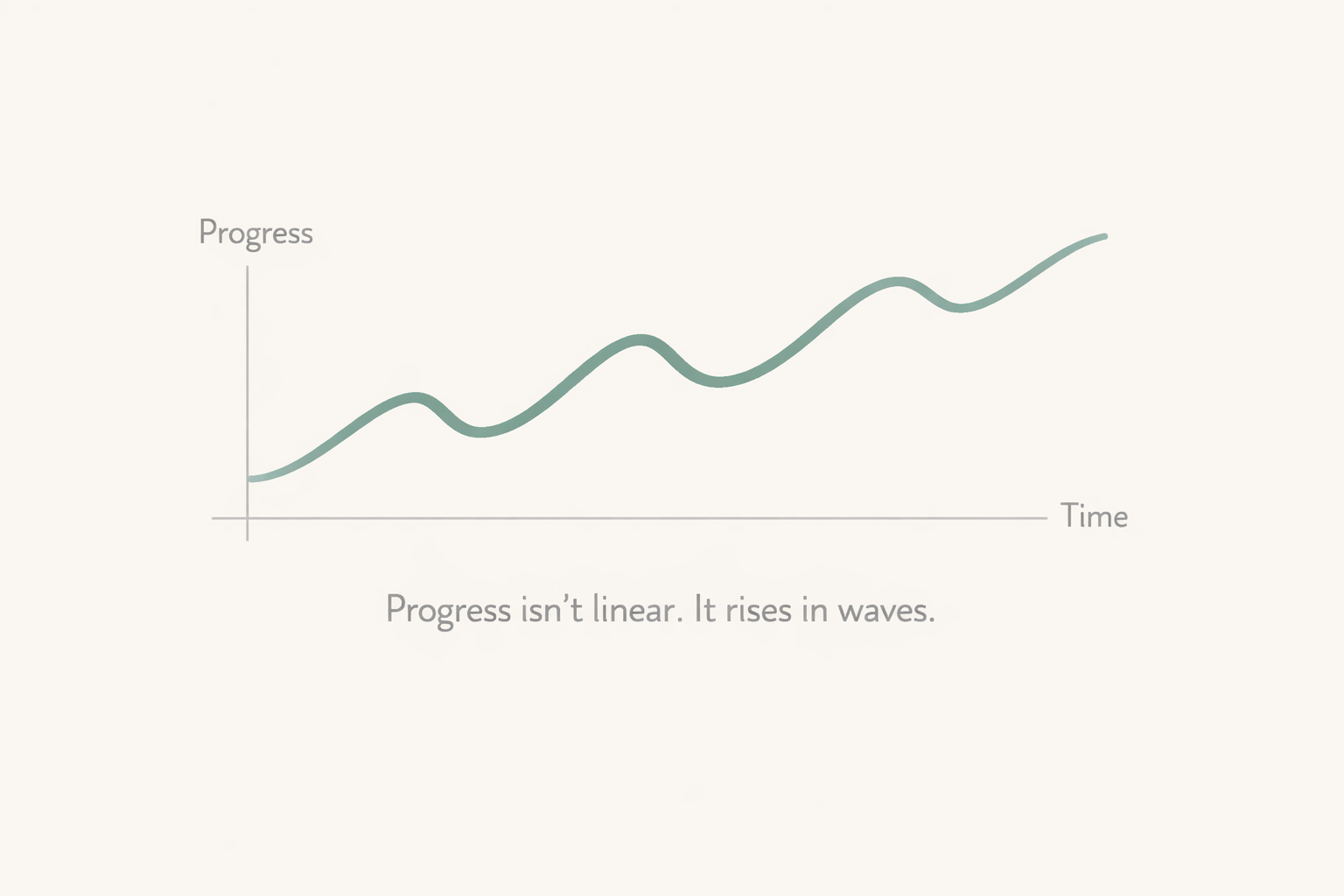
Whether you’re recovering from an acute injury, surgery, or managing persistent pain, recovery rarely moves in a straight line.
Less pain. More strength. More function. Every week better than the last.
But that’s rarely how healing works.
Why Recovery Fluctuates
Almost everyone experiences setbacks at some stage.
Sometimes it’s: • Doing too much, too soon • A busy or stressful week • Poor sleep • More driving, housework or physical tasks than usual • One longer run • Extra time sitting or standing in unfamiliar ways • Minor illness or fatigue
These changes increase overall load. And increased load can temporarily aggravate a tendon, joint or sensitive area.
Pain does not always mean damage. Often, it reflects a system that felt temporarily overwhelmed.
That fluctuation is not failure. It’s how adaptation happens.
The Biggest Fear: “I’m Back to Square One”
This is the thought that causes the most distress.
But in reality, true regression to the beginning is rare.
Most flare-ups are temporary increases in sensitivity — not structural collapse.
Your body hasn’t forgotten everything it has learned.
What To Do When A Flare Happens
The answer is rarely to stop everything.
Instead: • Reduce intensity • Take a step back in load • Maintain gentle movement • Use your recovery strategies • Give it a few days
Consistency beats panic.
This is exactly how I approach recovery in clinic — adjusting load, maintaining movement, and helping you understand what your body is telling you.
You can read more about my approach here → How I Work.
Progress Looks Like This
Not a straight line upward.
More like a rising wave: Small setbacks. Higher baseline. Small setbacks. Higher baseline again.
That’s growth.
Final Thought
If you’re navigating recovery, expect variation.
It doesn’t mean treatment isn’t working. It doesn’t mean you’ve failed. It doesn’t mean you’re broken. It means your system is learning. And learning rarely moves in a straight line.
If this sounds familiar…
If you’re navigating recovery and feeling unsure about flare-ups, you don’t have to figure it out alone.
Understanding what your body is doing — and how to respond — often changes everything.
Book your first session and we’ll build a plan that moves forward, even when recovery fluctuates.